
Have you heard about the Third Place?
The concept isn’t new.
You may already call your community a ‘Third Place’.
Understanding what it is can help bring together a lot of separate strands in community design.
In this article, I'll summarise what the Third Place is and how people who create successful Third Places can help us with our community design and community management.
Thanks to YATM’s Mark Masters for sharing and prompting me to write this article.
What is the Third Place?
Yes, whilst it’s used to describe the bronze medal spot in sport, it’s also an important sociological phrase.
The Third Place is a social space that is distinct and separate from an individual’s typical day-to-day social environments: home (The First Place) and work (The Second Place).
A Third Place is a specific type of social environment that acts as a hub for community interaction and the formation of social bonds with others. It is distinct from the private space of home, and the professional place of work.
This definition was originally created in The Great Good Place, a book by Ray Oldenburg published in 1989.
In his book, Oldenburg talks about the importance of informal, public gathering places for fostering community, democracy, a sense of place, a sense of belonging and “civility”.
The Third Place is where conversation gatherings are unplanned and conversations can organically happen. And as Oldenburg said, they serve as equalisers, transcending distinctions of status, class, and race.
The book was updated in 2025. In The Great Good Place II Oldenburg's co-author Karen Christensen argues that third places are the answer to loneliness, political polarisation, and climate resilience. Importantly, she also clarifies that there is a crucial difference between third places and public spaces.
“Third Places have always been a part of our culture - from the Agoras in Greek cities, markets, 17th century European coffee shops, tearooms, pubs and bars. But in today’s highly polarised society, they feel more important than ever.” Michelle Goodall
How are Third Places different from Public Spaces?
A "public space" is a broad category that includes any publicly accessible area, like a park, town square, shopping mall or a row of outdoor benches, but lacks the specific social-gathering and community-building emphasis of a third place.
While many third places are public, not all public spaces function as third places.
Civic buildings which are open to the public, such libraries, town halls and museums are public spaces, but there are limits upon use specifically for meeting and for conversation. There is also a focus on people using these primarily for solo activities such as studying and browsing versus social use.
We wouldn’t have traditionally considered these to be Third Places, but because so many government-funded Third Places have had their funding cut, many public libraries and town halls now actively encourage social, community activities and gatherings such as storytelling sessions, workshops and meetings.

The Town Hall at Walthamstow provides a creative, civic backdrop for this free public art installation during London’s first borough of culture events in 2019.
Examples of Third Places
The UK has a rich heritage of pubs and clubs, such as Working Men’s Clubs. Many of these have evolved to become much more than a place to buy a drink. Increasingly, these are spaces that foster conversation, build community, and provide a place for relaxation and social connection with both friends and strangers.
I grew up in pubs and saw the very real impact that they had on their local community. They were social hubs in difficult times and a space for community celebration. The pub combatted loneliness and isolation for many people.
The pub ‘regulars’ kept the place going. Others drifted in and out. It was a safe, welcoming space for all. Conversation would cover many topics - politics, sport, relationships, music, the arts but also include a lot of shared experiences around TV, bad jokes and banter.
My experience was, as Oldenburg suggests, that these Third Places did “transcend status, class and race.”
Other Third Places can include cafes, but also community centres, hairdressers, gyms and places of worship.
Increasingly, privately owned buildings are being designed to include an area of public space that is open to the public in order to gain planning permission. At a time when budgetary pressures are causing closure of important public spaces, we are now relying on the goodwill and vision of private companies to create public spaces for people to gather.
And we can also see this in community building.
Applying Third Place thinking to community building and community management
When it comes to community building and community management, thinking about the Third Places that you have personally experienced can help us understand what the foundations of a great community are.
It can also help us create an environment that fosters healthy communication and relationships.
Here are just some of the elements of successful Third Places that I’ve experienced and applied to the communities I’ve helped to build:
1. Create a safe, welcoming and inclusive environment
Third Places will have a set of rules, opening and closing times and do their best to welcome and cater for all who are happy to follow the rules. Third Places usually have an owner, management structure, and a team to manage the operations. They make the space safe, clean, accessible and foster enjoyment.
The people who work at the best Third Places are friendly and know their members/visitors names. They never let anyone feel isolated or alone.
When designing communities, I imagine the theme tune from the US sitcom Cheers. I love this sentiment. You’re welcome even if you are feeling troubled. In fact, you’re doubly welcome if you’re feeling down. It was an important principle in our pubs too.
”Sometimes you wanna go
Where everybody knows your name
And they're always glad you came
You wanna be where you can see (ah-ah)
Our troubles are all the same (ah-ah)
You wanna be where everybody knows your name”
From The Cheers Theme - a song by Gary Portnoy and Judy Hart Angelo ‧
A great example of a safe, welcoming and inclusive space is the Dusty Forge. A vibrant, historic community hub in Ely, Cardiff. It can be described as central "community living room" and provides wide range of local services, advice, low cost food, a community garden and a repair cafe/workshop.
Its purpose is to improve the lives of local residents by creating a welcoming, inclusive community space for all.
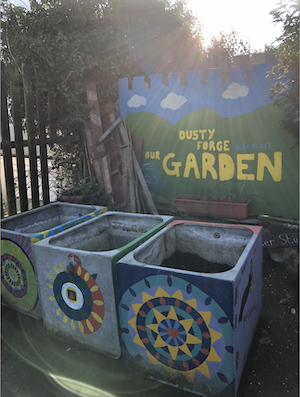
The Dusty Forge is a safe, welcoming and inclusive community and Third Place in Cardiff
2. Affordability for those who need it most, but don’t have the means
I wonder whether Oldenberg and Christensen think exclusive clubs like New York’s The Core Club, Monaco’s Yacht Club or even Soho House are Third Places.
Probably not. Whilst these are gathering places for fostering community and provide a sense of place and belonging, their exclusivity and luxury price tag means that they don’t “transcend class and and status”.
We do see many Third Places keeping costs to entry low, to ensure that as many people as possible can access them. My local community in Walthamstow has a fabulous Third Place called The Trades Hall, which keeps membership fees, drinks and ticket prices extremely low.
The Dusty Forge is a community space where local people have built their own organisation to make change, tackle poverty and promote wellbeing. The community shop keeps prices low for people who would otherwise struggle or rely on foodbanks. The regular repair workshops not only save residents money but also provide a space for older people with ‘make and repair’ skills to meet and socialise whilst helping others.
Like the Dusty Forge, The Trades actively promotes the space as a place for elderly to come for free coffee, tea, warmth and conversation during cold winter months.
No wonder The Trades and Dusty Forge have been called “a beacon of community spirit”. They both focus on accessibility capture the real essence of community.
3. Work with an active and supportive set of volunteers
Many Third Places have full or part time staff, but simply couldn’t run without the support of people who give their time for free. Whether that’s as a trustee or a volunteer who helps with repairs, maintenance or marketing and finance.
These volunteers have usually experienced some positive impact from the Third Place on their own lives and wish to give back. Volunteers are precious. Most communities need some form of volunteer support at some point in their lifecycle.
More on this in a future article.
4. Balance comfortable rituals with things that surprise and delight
Think about a Third Place that you love. I’m pretty certain that there will be regular events or things that you expect every time you visit that give a sense of familiarity and comfort.
Perhaps your local coffee hub has a monthly bring and swap event, a weekly knit and natter session or a special menu item every Friday.
Maybe your local barista always remembers that you have skimmed milk and they craft unique signature latte art in your cup.
I’ve written about the importance of rituals in online communities in this article.
Rituals are recurring or sequenced activities, traditions or behaviours that hold symbolism and meaning for community members.
Rituals play an important role in community building and can contribute to a sense of comfort, belonging, identity, and cohesion within groups. They can also help establish and reinforce a community’s values, and encourage participation and trust among community members.
It’s also important to balance expected rituals with new ideas or events, as they also help to create bonds and keep people interested. Whether that’s someone new on the menu or a new challenge, it holds members attention, and creates anticipation. Again, think about what you’ve seen in your favourite Third Places and use it as inspiration for your community.
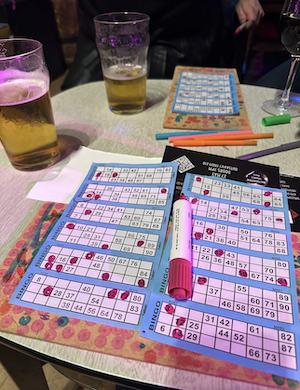
Bingo features regularly in Walthamstow’s Trades Hall events, but they also run events for all ages and tastes.
In summary
Apply a Third Place lens to your community by considering the most welcoming places where you gather and seek conversation with others.
Ask what makes these spaces feel like places where you wish to spend your time and possibly your money.
Expand on the above by thinking about how you can apply the elements that make them successful to your own community.
Thank me / Hire me
I’d love to know whether articles like this are helpful to you.
Please do contact me if you’d like to discuss any aspect of community building or if you want support with your community strategy.
Please do contact me if you’d like to discuss any aspect of community building or if you want support with your community strategy. I’m happy to discuss both small and large projects.
Further reading
I’ve created a community glossary and I also explain key concepts in community strategy, community building and community management.
Here are some connected articles that you may find helpful:
What is the ‘Expansion Effect’ in community strategy?
Is it possible to create a successful consumer brand without community?
Transactional analysis in community
Why Community is a Business Moat
What is a Community Qualified Lead (CQL)? And how does it differ from a MQL or PQL?
What is Community Everywhere / what are Community Ecosystems?
What is Community Led Growth - is it the same as Community Based Marketing (CBM)?
What is Community Market Fit?
What is Minimal Viable Community (MVC)?
What are rituals in community building and why are they so important?
What are the 5 Ps and 1 C of community?
What is Broken Windows Theory and does it apply to Community Management?
What is Community Manager Appreciation Day (CMAD)?
Why we need to ban the term ‘lurkers’ in community strategy
The Definitive Community Glossary - A - Z
Book a Free Consultation
Want help or support with your community strategy or community building? I’m ready and waiting to hear from you. Book an introductory call to speak to me about your challenges and questions you might have.
All Photos by Michelle Goodall ©